i want my jacket back

  • home
  • about the project
  • using music & humor
  • about dr. freitag
  • photo & video
  • testimonials
  • tour dates
  • workshops & trainings
  • jacket art
  • contact dr. freitag
  • blog
  • gender violence resources

"Tiny Hands" is not an Equality Anthem

1/19/2017

10 Comments

 
Much of my work as an educator, researcher, and activist centers on gender equality. I have organized marches, protested outside of courthouses, and directed The Vagina Monologues. I have trained crisis volunteers and facilitated discussions about sexual objectification in “Blurred Lines.” I teach courses on ending gender violence and talk to audiences about rape culture. I am obsessed with Wonder Woman. But friends, let me clear: “Tiny Hands” is not my anthem. And it shouldn’t be yours.
Picture

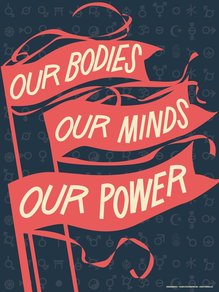
​I support art and protest as an avenue for social change, and I believe in the freedom of expression. So it follows that Fiona Apple (whose Extraordinary Machine album is brilliant, by the way) has a right to create politically-motivated music that reflects her views on the fact that our new president has said downright awful things about women. Things that suggest it is ok to grab women inappropriately or at least talk about doing it if one is trying to reinforce their manliness. It’s not just locker room talk. It’s disgusting, and we have a right to be angry.


But when you march down the street this weekend, rally at your state capital next month, or Take Back the Night this April, I hope you strongly reconsider “Tiny Hands” as your rallying cry. Though “we don’t need your tiny hands anywhere near our underpants” is catchy, it actually undermines the very principles of women’s movement and gender equality. Here’s why.

First, attacking Donald Trump for his alleged penis size is not only cheap, lazy, and completely unrelated to real criticisms that one might bring against him—it actually reinforces the kind of rigid gender roles many of us in this movement try to deconstruct. One of the underlying assumptions of gender inequality is that, as a society, we have unrealistic expectations for who a man or woman should be. And when we fail to live up to them, we get a pushback. Women get called bitches for being too assertive. Men get called bitches and pussies and slew of gay slurs for crying at movies, not drinking enough beer, or not being tough enough. 

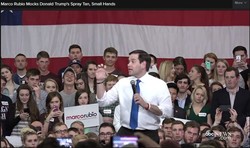
This system can work great for you if you follow the rules, stay within the boundaries of your society-deemed gender, and do whatever you can to maintain your womanly-woman or manly-man image. And the pressure to stay in these rigid gender boxes means that people—especially men—often take defensive and offensive measures to maintain these images at all costs. We’ve seen how this played out in the presidential primary. In response to Donald Trump’s diminutive nickname for Marco Rubio, Rubio’s response was to attack Trump’s hand (ahem, penis) size. It was a battle of masculinity, and may the best display of manliness win. Right?
Picture

​Though I appreciate the doubly-layered consent and reproductive rights message of not wanting “hands anywhere near our underpants,” the penis size attack seems hypocritical as a rallying cry if we really believe that loosening up rigid gender roles is central to achieving gender equality. Hypocritical, and low. Literally below the belt low.
 
Second, an attack on penis size is a form of body-shaming I just cannot get behind. It wasn’t cool when New Girl did that terrible episode that mocked what the gang referred to as a guy’s “micropenis,” it wasn’t funny when naked Trump statues perpetuated discrimination based on body and genital size, and it isn’t at all ok to mock the bodies of people who identify across the transgender spectrum. So what makes it different now?
 
A central focus of social movements focused on equality is undoing harmful power dynamics that keep the dude with the tiny hands down and the dude with the big hands up. It’s not about switching the power dynamics so that tiny dude walks all over big dude, but about changing the conditions of the arrangement so that little dude can enjoy the same freedoms and privileges as big dude. It’s about equal opportunity, freedom from discrimination, and a better quality of life.
 
When we make attacks based on penis size, we’re using an assumption of perceived lack of masculinity to make ourselves seem superior. And we’re doing it through body-shaming. It’s like telling a fat joke to make yourself feel skinnier and more powerful. Would we incorporate a fat joke into our march chant? I don’t think so.
 
Third and finally, making “Tiny Hands” our feminist anthem only functions to re-position Donald Trump at the center of our efforts. Though his comments have certainly been a catalyst for renewed activist energy, making him the focus of women’s rights by chanting about his penis over and over seems misguided. Change those lyrics to grabby hands and I’m more on board. Start a round of “I am woman, hear me roar” and I’ll even join you.
 
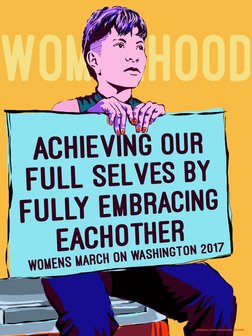
All I am saying is that, fellow activists, we can do better this. We can do better than penis size attacks and body-shaming and insults to make ourselves feel temporarily superior. We can be angry and clever and effective without being hypocritical. We can march to an anthem that is consistent with our goals of genuine equality. We can rise, but not at the expense of our integrity.
Picture
10 Comments

Battlebots, Women, and Taking Up Space

7/14/2015

14 Comments

 
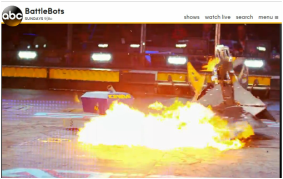
Recently, my significant other and I have made a Sunday evening tradition of Battlebots. We settle on the couch with a pizza, make predictions about which bots will last the round, and yell out in playful glee as these big chunks of metal shred each other apart in each three-minute match. It’s pretty awesome. 
Picture

There aren’t many ladies on the show, but there are a few standout women engineers in the championship quarter finals like Andrea Suarez (Witch Doctor) and Wendy Maxham (Stinger the Killer Bee) who have built some pretty fantastic bots. 

There are also two women announcers. Though I’m not sure they have as much fun as ring announcer Faruq Tauheed does when he introduces the competitors (which seriously must be the best job on the show), Alison Haislip provides enthusiastic sideline reporting dressed in stylish nerd fashion. She’s cool, and she seems to connect well with the engineers she interviews. And then there’s Molly McGrath.

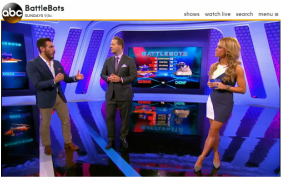
Though McGrath is the first cast member listed on the Battlebots website and she holds the general title of host (Chris Rose and Kenny Florian are play-by-play and color commentary announcers), her role seems to deviate the most from the super nerdtastic amazingness that is this show about remote-controlled machines battling it out in a combat elimination tournament. I’m not just talking about how she is clothed, though her short, tight dresses and heels seem to be meant for dudes who apparently need a stereotypically-presented female figure to reinforce the masculinity they risk losing by watching a show about robot battles. It’s not Sunday night football. Clothing choices aside, McGrath is presented as the eye candy intermediary between all of the other commentators on the show. Perhaps more significant than the lack of airtime or substance she is able to present as host, however, is the way McGrath stands as she interacts with Rose and Florian in the studio. 

Picture

Instead of standing strongly on two feet, McGrath often stands on her right foot, crosses her left foot out in front of her right leg, and points her left toe. It must take a lot of work to stand that way – she’s rocking fabulous stilettos as she does it – but I question what the directors and producers of this show are going for with this ultra-meek, deferential, and supposedly sexy posture. As someone who teaches public speaking, I am especially concerned that a professional sports reporter like Molly McGrath is modeling a stage presence predicated on her ability to make herself appear smaller. If you watch closely, you’ll notice that her transitions to actually standing on two feet (a grounded, empowered speaking position that is Public Speaking 101) are clunky and awkward. And if you really think about it, watching McGrath do the cross-legged standing thing just seems weird in a context in which badass women engineers are dominating the Battlebot arena with heavy metal flippers and flame spitting partner bots. I mean really. It’s distracting, and it makes me mildly furious because I’d rather not have to get all feminist critic on a show about battling robots.

I’m not suggesting that Molly McGrath is anything short of capable and empowered. She is an engaging host with the small segments she is given. But I do wish the producers would give her the literal space she deserves to do her job, look hot, and seem strong and grounded as she does it. After all, Molly McGrath is not a robot herself, nor should she be made to act like one.

14 Comments

Feminist Frank is not Boyfriend Material

5/28/2014

1 Comment

 
I’m not out to ruin everyone’s fun. Honest. It just seems that in the midst of the mainstream feminist movement’s love affair with Feminist Frank, we worship him much too easily. I mean, this meme has been posted with glorious admiration by many of the feminist and critical blogs and sites I follow (like Feministing and PolicyMic) as well as some of the more sort of feminist stuff I read (like HuffPost Women or Buzzfeed). And aside from PolicyMic’s actual discussion of how the meme may function, each of these sites wholeheartedly embraces Feminist Frank without any critical interrogation. Buzzfeed even suggests that Feminist Frank would be the perfect boyfriend. Hmm. Though I don’t think that’s what folks are really thinking when they encounter the meme, I do think we owe it to ourselves—as feminists—to take a closer look beyond the initial chuckle of enjoyment we get from these incredibly misogynist phrases being subverted by an Abercrombie-looking presumably straight white dude we don’t expect to have feminist sensibilities.

But does Frank have feminist sensibilities? And does he, as Elizabeth Plank suggests, really allow “women to imagine a world where even the douchiest douche has the potential to be an ally. Maybe women can have it all?” Is this our fantasy scenario? Because if so, I think we’re setting the bar quite low. And as much as I wish all the entitled cis white straight men would wake up and realize how ridiculous and harmful misogyny and gender stereotypes and traditional masculinity really are and join the movement to end gender violence, I’m really not thrilled about posers like Feminist Frank being touted as the new representatives of the feminist movement.  

Here’s why. First of all, we wouldn’t actually like Feminist Frank in the flesh. Just imagine him as a real guy. If I was at a party and this preppy dude walked up to me with an opening line like, “You can’t rape the willing…” and then quickly followed it up with “which is why getting your consent before we make out is super important to me” I would still think he is a misogynist jackass despite his attempt to “save” the first part of his sentence. If Frank was truly a feminist, he wouldn’t try to woo me with rapey pickup lines. He’d be doing real feminist work instead of co-opting the language of feminism to try and impress women. Rebecca Vipond Brink makes a similar argument about Feminist Frank, suggesting that

       “These are men on the left who say that they’re            feminists but who never act like it; who speak              over women in discussions about women’s                    rights instead of listening to us. They’re guys                who are sexist, but who cloak themselves in the            language of leftist and feminist politics in order 
       to claim that they’re not.”

Second, Feminist Frank relies on the rhetoric of sexism and rape to set the foundation for his redeemability.
Though each of these phrases

        That chick totally blew me
        Dang gurl that ass
        I’d hit that
        I got 99 problems and a bitch ain’t one
        Watch me smack that ass
        That bitch sure is a prize

is followed by a clause intended to subvert their misogyny, Feminist Frank’s statements only work as humor or entertainment because they are misogynistic. The meme is enjoyable because it defies our expectations. I can get on board with that to a certain degree, but I think we need to ask what it means that our humor and entertainment is based upon a foundation of violence against women and girls. I get that Feminist Frank’s intended audience is already informed feminist-minded folks, but are we making a joke of sexism and rape in a way that will minimize their seriousness? Is the risk worth our enjoyment?

Third, though I’m obviously a proponent of the idea that anyone—everyone—can be feminist (I subscribe to bell hooks’s definition of feminism as a movement to end sexism, sexist oppression, and exploitation), is Feminist Frank really the epitome of feminist success? Are cisgender white straight middle and upper class men really the last frontier of feminism? This is a far more complicated question than can be teased out here, given that these are the folks who get away with committing the most violence against women and who arguably pose the greatest threat to the liberation of women—and all people, inclusive of differences in gender identity, sexual orientation, race, class, nationality, ability, etc. So what if instead of situating Feminist Frank as our feminist man idol we instead frame the meme as a sad and ironic example of how screwed up the world is: that this is what feminist looks like? Feminist Frank as dark feminist humor—instead of lighthearted feminist fantasy—is something I could really get behind.

I pose all of these thoughts as questions more than as a definitive argument. Certainly there are some variations of the Feminist Frank meme that are not as overtly violent or do not rely as wholly on sexually violent language to make their point. In fact, the presumably first Feminist Frank image used the phrase, “Women who dress provocatively deserve…to be treated with respect and decency, just like everyone else.” Love it. And “I’m gonna get loud…at the demonstration this evening – Take Back the Night!” is certainly fun and devoid of violence. It’s also important to note that Feminist Frank functions very similarly to sexual violence prevention efforts like the Make Your Move campaign that subvert creepy phrases to encourage bystander intervention: “I could tell she was asking for it…to stop. So I stepped in and told my buddy that was no way to treat a lady. And he backed off.” I applaud the creativity because we certainly need it when it comes to prevention. But a lot of the questions I have about Feminist Frank are also questions I have of these campaigns.

Perhaps Feminist Frank is a first step, as some have suggested, for more men to actively take part in feminist conversations—though it’s impossible to know how many men are actually reproducing the meme, or what motivates them to participate in the discussion, be it an excuse to participate in misogyny disguised in a feminist mask or actual interest in eradicating sexism. And I have yet to read any commentary on Feminist Frank written by men. This is why I’m skeptical.

So, I invite you into a dialogue about feminism, social change, and men’s engagement with, or performance of, feminism. Thank you, (Faux) Feminist Frank, for being a catalyst for this discussion. I would never date you, but you do bring up important stuff we need to think about as we strive to end sexism and gender violence.

1 Comment

Empathizing with Chris Brown

10/10/2013

5 Comments

 
Let’s talk about traditional masculinity. It expects men to be heterosexual, hypersexual, always sexual. It demands a performance of hardness and strength and leaves little room for showing or admitting vulnerability, tender emotion, or weakness. It entices boys and men to view sex with girls and women as conquests that prove their manhood, their worth.

We don’t talk about sexual violence committed against boys and men enough. If we did, we might recognize that our very rigid adherence to binary gender roles—and the maintenance of traditional masculinity as a part of this system—can make it very difficult for someone expected to perform “MAN” to tell someone they may have been abused—or to even admit that to himself.

So I’m really not surprised that Chris Brown, in a recent interview, apparently bragged about losing his virginity to a fourteen year-old girl when he was only eight. He spins what you or I might consider child sexual abuse as early practice for “being a beast at it….the best at it.” However he chooses to label his experience is not really my concern, whatever expertise I might have about these kinds of scenarios. If anything, Brown’s experience—or his telling of it—demonstrates the massive pressure men are under to perform heterosexual masculinity, whether at eight years old or twenty four.

I was surprised, however, at how one writer for Jezebel responded to Brown’s comments:

“Of all the pop stars milling about the culture [sic] landscape these days, Chris Brown has a singular talent for making it impossible to sympathize with him even if he’s recounting a vaguely traumatic incident from his childhood. You know, like that time he lost his virginity to [a] teenage girl. When he was eight.”

In a rape culture world that constantly blames and silences victims, is our hatred of Chris Brown’s abusive behavior so powerful that it prevents us from thoughtfully reflecting on his own experiences of victimization? Whatever education Brown got from his peers, pornography, or witnessing the abuse of his mother by his stepfather has undoubtedly played a major role in how he views and treats women. It does not excuse what he’s done, but it provides one window into beginning to understand his abusive behavior within the context of a patriarchal system that teaches men they need to dominate women to feel any sense of power.

I do not find it impossible to empathize with Chris Brown. I do not believe his abusive behavior should be tolerated or excused, but I refuse to hurl hatred at him because he seems to have minimized an experience of early victimization. Dismissing Brown as being “impossible to sympathize with” oversimplifies the complexities of sexual and partner violence and positions him as a scapegoat for many of us—especially white folks—to pile on layer after layer of anger we have toward men who commit violence against women. When we focus all of our attention on the individual behavior of one person, we underemphasize that gender violence is a systemic issue fueled by toxic gender expectations.

I empathize with all of us for having to deal with this screwed up system. I empathize with men who feel so powerless in their own sense of self that they feel they have to prove it through abuse and sexual violence. I empathize with men who got there because they were emotionally, physically, or sexually abused themselves. This reality is a cultural failure which we all share responsibility for changing. Perhaps we can start by investigating the complex negotiations behind each façade of masculinity. 
5 Comments
    Picture

    Author

    Jenn Freitag, Ph.D. is an educator, activist, scholar, and performance artist committed to ending gender violence. 

    Archives

    January 2017
    September 2016
    May 2016
    August 2015
    July 2015
    June 2015
    May 2015
    May 2014
    April 2014
    November 2013
    October 2013

    Categories

    All
    Consent
    Dialogue
    Equality
    Feminism
    Gender Roles
    Hope
    Humor
    Justice
    Language
    Masculinity
    Pop Culture
    Pop Music
    Prevention
    Protest
    Risk Reduction
    Safety
    Self-care
    Self-defense
    Sexual Assault Response
    Sexuality
    Stalking
    Victim Blaming
    Victim-blaming

    RSS Feed

Proudly powered by Weebly